
50 years after 1976: What kind of leadership does South Africa’s next generation need?
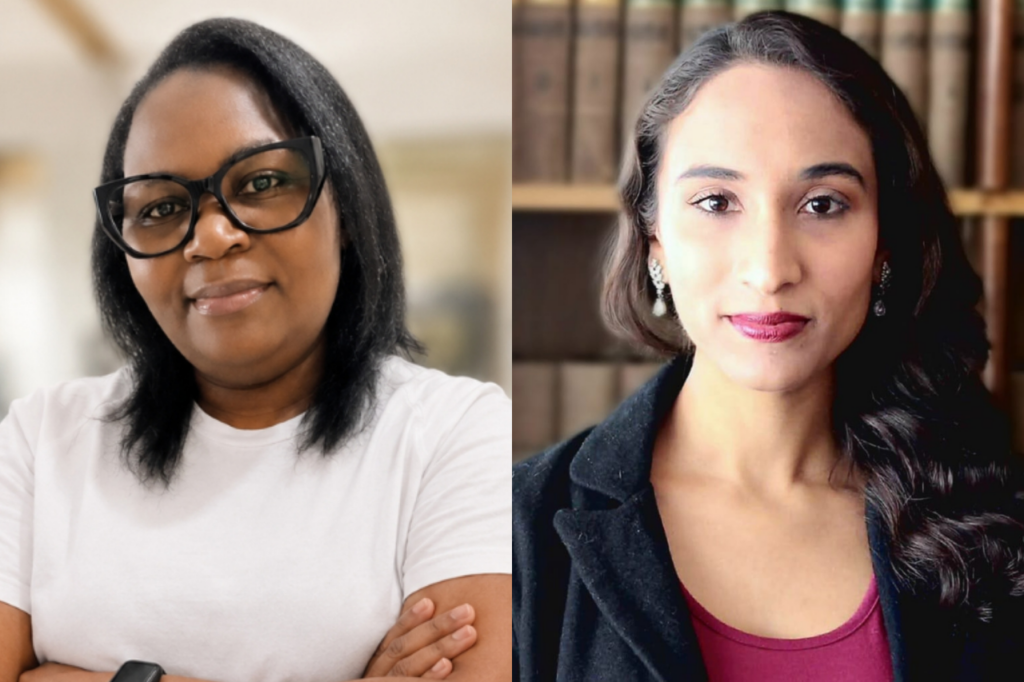
50 years after 1976: What kind of leadership does South Africa’s next generation need? 50 years after 1976: What kind of leadership does South Africa’s next generation need? As South Africa marks Youth Month and the 50th anniversary of the 1976 student uprising, questions about leadership, agency and social change remain as relevant as ever. While the challenges facing young people today may look different, the need for courageous, thoughtful and collaborative leadership continues to shape the country’s future. Against this backdrop, Citizen Leader Lab team members Dipuo Mafatle, Monitoring, Evaluation, Research and Learning Officer, and Zah’Rah Khan, Brand and Editorial Storyteller, have been selected for the highly regarded DG Murray Trust Fellowship, a cohort-based leadership development programme that brings together professionals under the age of 40 from across South Africa. This year’s selection process was highly competitive, attracting 64 applications from across sectors. The Fellowship, which begins in July, creates space for participants to engage with complex social and organisational challenges through dialogue, reflection and peer learning. For both young professionals, the opportunity comes at a time when conversations about leadership are evolving. “One idea about leadership that I am open to rethinking is the belief that strong leaders should always appear confident and certain,” says Mafatle. “For a long time, I associated leadership with having clear answers, making decisive decisions and projecting confidence at all times. As I have gained more experience, I have started to realise that leadership often involves navigating uncertainty, asking difficult questions and being willing to acknowledge what you do not know.” Khan believes young people have an important role to play in reshaping traditional notions of leadership. “I am open to rethinking leadership as something that rests primarily in individuals or formal roles. Much of my experience suggests leadership is often distributed,” she explains. “I want to explore how leadership shows up in less conventional ways, including creating the conditions for others to lead. We often overemphasise positional leadership and undervalue the quieter forms of leadership that help hold communities, institutions and systems together.” Their reflections resonate with broader conversations taking place during Youth Month, particularly as South Africans commemorate the legacy of the young people who challenged injustice in 1976 and demonstrated the power of collective action. According to Mafatle, future leaders will need a combination of humility, authenticity and a willingness to learn. “I believe authenticity and humility are important qualities for future leaders. People are more likely to trust and engage with leaders who are genuine, willing to listen and open to learning from others,” she says. “For young people, leadership is not only about influence. It is about building relationships, working across differences and remaining open to growth.” Khan agrees, adding that leadership today requires both awareness and action. “For young people, it is about agency, not waiting for permission to think, question and act. It is also about collaboration,” she says. “It means acknowledging our history as a country but not being shackled by it. It means being fair and just, and remaining conscious of the realities people experience every day. Leadership must be inclusive, attentive and responsive to the world around us.” As part of the Fellowship, Mafatle and Khan will collaborate on a joint project aimed at translating insights from the programme into practical learning opportunities for Citizen Leader Lab. Both see the experience as an opportunity not only for personal development, but also to deepen their contribution to leadership development work in schools and communities across South Africa. As the country reflects on the legacy of 1976, their selection serves as a reminder that leadership continues to evolve, and that the next generation of leaders may be defined less by authority and certainty, and more by curiosity, collaboration and a commitment to learning. Ends. About Citizen Leader Lab Citizen Leader Lab is a South African non-profit organisation focused on developing ethical, practical leadership across education and other public sectors. Through long-term partnerships and collaborative learning, Citizen Leader Lab works with leaders in complex and resource-constrained
Care, against the odds

Care, against the odds How Citizen Leader Lab’s women principals are catalysing care to dismantle injustice Care, as a leadership quality, has long been underestimated: Brushed off as soft, secondary, patronisingly feminine. But women principals in our schools are proving that care is anything but. On International Women’s Day, under the theme “Rights. Justice. Action. For ALL Women and Girls,” their stories call for acknowledgement. Care that disrupts neglect Elizabeth Nakampi Principal Elizabeth Nakampi, a Citizen Leader Lab alumna, inherited Lehwelereng Secondary in 2022, at a time when the Hammanskraal school was struggling with poor mathematics results, substance abuse and absent parents. She could have let these crises define her. Instead, she turned care into disruption. Guided by Citizen Leader Lab’s leadership practices, she listened, consulted and mobilised the school’s stakeholders. Parental involvement jumped from 40% to 70%. Matric pass rates climbed past 90% and substance abuse declined. Beyond academics, Nakampi’s care translated into practical change: A vegetable garden to feed learners, health screenings, a maths hub and clean water from a borehole. Collective care, collective disruption Matshidiso Thobejane At Hans Kekana Secondary, also in Hammanskraal, Citizen Leader Lab alumna, Principal Matshidiso Thobejane, faced a community scarred by unemployment and HIV/AIDS. Many learners were growing up in child-headed households, and the school’s pass rate had collapsed to 55%. Her disruption was elegant in its simplicity: “How can we improve together?” Using leadership strategies honed through Citizen Leader Lab, teachers volunteered extra hours, parents stepped in and the community rallied. Within two years, the pass rate had soared to 94.6%, demonstrating how care, applied strategically, can transform a school and its community. Care that restores dignity Nokuthula Sibisi and Mark Fraser-Grant For Nokuthula Sibisi, the late principal of Sogidi Primary in KwaZulu-Natal and a Citizen Leader Lab alumna, care meant refusing to normalise indignity. Her learners were forced to use dangerous pit latrines. Her vision was clear: Eradicate them for good. Leveraging relationships built through Citizen Leader Lab, Sibisi mobilised support to secure safe, dignified sanitation facilities for learners. Her care confronted and disrupted decades of indifference. Mutual care, mutual disruption Hailey Harper and Dr Rochelle Davis For Dr Rochelle Davids, principal of St Theresa’s RC Primary in Cape Town, care meant learning to set boundaries. Partnered with Standard Bank executive Hailey Harper, she discovered that saying ‘’no’’ was an act of self-respect. Harper, in turn, gained a deeper appreciation for the immense responsibility public school principals carry. Their partnership was built on mutual care: Each offered encouragement and perspective and each experienced transformation. There was care in reciprocity, disrupting traditional mentorship hierarchies. Disruption that expands Debbie Jephta Having progressed from school principal to circuit manager, Citizen Leader Lab alumna, Debbie Jeptha, now mentors other school principals, propagating a culture of collaborative leadership across schools. Her disruption is systemic: Opposed to hoarding leadership and power, she multiplies it through care. Justice through care Justice is not abstract. It is embodied in the daily work of women school principals challenging inequity in South Africa’s schools. Justice is when pit latrines are replaced with safe facilities, restoring dignity to learners. Justice is when parents, once disengaged, become active partners in education. Justice is when women leaders, long overlooked, are recognised as the strategic visionaries they are. And it’s care that makes justice tangible. This is the work Citizen Leader Lab has supported since 2010. By partnering with over 2,000 school principals, including nearly 1,000 women school principals across South Africa’s nine provinces, Citizen Leader Lab channels care into leadership and system change. Each partnership between a school principal and business leader impacts more than 25 teachers and 800 learners. Care, boldly Citizen Leader Lab’s women principals are proving that care can mobilise communities, transform schools and build futures. They show us that when we give time, trust, resources and recognition, we gain justice, dignity and hope. So here’s the challenge this International Women’s Day: Support a world where care is power, claimed unapologetically by women leaders. It’s a radical redefinition of leadership for a just future. About Citizen Leader Lab Citizen Leader Lab is a leadership development and support Non-Profit Organisation, committed to creating resilient leaders in both public and private sectors. Our vision is Leadership that builds a better future for all. Through our programmes and workshops, we empower individuals to become effective leaders and change agents in their communities. With 15 years of experience, Citizen Leader Lab promotes cross-sector collaboration, active citizenship and social cohesion, with a growing presence in the education sector.
Behind every leader, a partner

This work moves forward because people choose to back it. Our donors and partners make it possible for us to sustain our programmes, support our facilitators well and remain present in schools and municipalities long enough for real change to take root. As we move into the next cycle, our focus is on: Launching 25 leadership cohorts across South Africa Testing and embedding Strategic AI for Instructional Leaders (SAIL), a programme designed to equip school principals with practical AI skills to strengthen their instructional leadership and school performance Building longer-term pathways that allow leaders and communities to keep working together to sustain progress beyond a single programme cycle These priorities are demanding and call for ongoing partnership, rather than one-off contributions. To partner with us: Shane: Shane@citizenleaderlab.org Nontuli: Nontuli@citizenleaderlab.org Donate: citizenleaderlab.org We thank you for supporting the vital work of leadership development, especially in contexts where the work is most challenging.
No slow season for leadership

The first quarter has been busy across Gauteng, Limpopo and KwaZulu-Natal, with leadership cohorts concluding, new ones launching, and our footprint continuing to expand. In February, three Leaders for Education cohorts reached the end of their 12-month journey: Our 22nd and 23rd Tshwane cohorts Our 58th cohort in Johannesburg These milestones mark a full year of sustained work by the participating school principals and business leaders, supported closely by our programme facilitators who carry the patient, relational work that turns theory into practice within schools. The Tshwane cohorts will extend their learning beyond year one by embarking on Leaders for Education Year 2, while principals in KwaZulu-Natal schools move into their third year as part of our three-year pilot. This longer runway allows leaders to navigate complexity over time, testing ideas, adapting practice and embedding change within the realities of their schools. This quarter also takes us into Badplaas, Mpumalanga, with our first Leaders for Education cohort in the town. At the same time, new cohorts in Polokwane, Lephalale and Durban strengthen our presence in Limpopo and KwaZulu-Natal. In Johannesburg, we mark our 60th cohort in the city, focused on schools in the East Rand — a reminder that reaching more schools matters only if each school experiences meaningful change. In 2024, we expanded into the municipal sector with the launch of our first Leaders for Municipality cohort. In 2026, we will be launching our first cohort in Gauteng, bringing business and municipal leaders into structured partnerships and creating opportunities for shared problem-solving in local government, where leadership pressures are both acute and constant. This growth inland is mirrored across the Western Cape, Eastern Cape and Free State, where Citizen Leader Lab will be launching programmes that bring leaders together. In the Western Cape, Stellenbosch will host the first School Management Leadership Programme in March, welcoming four schools: Stellenzicht High School, Kylemore Secondary School, Weber Gedenk Primary School and Vlottenburg Primary School. Alongside this, eight schools along the Garden Route, in Knysna and Plettenberg Bay, will begin the Leaders for Education Programme, fully funded by the FEM Education Foundation. Further along the coast, the Eastern Cape will see the programme launch in the Mthatha area and Tabase Village in April, supporting eight schools through the Trevor Noah Foundation’s Khulani Nathi Innovation Fund. In the Free State, April will also bring new cohorts in Wesselsbron and Bothaville, with seven schools in Wesselsbron and one in Bothaville joining the programme.
The Class of 2025 did more than pass. They chose the future.

The national pass rate may stand at a record 88%, but the headline is ‘’school leadership matters’’ In January, the Department of Basic Education announced the 2025 National Senior Certificate results, reporting a national pass rate of 88%. This number has been used to declare success, signal crisis and frame political messaging. But on its own, it does not tell the full story. The Class of 2025 wrote exams in a country where public schooling has to shoulder the heavy burden of inequality every day. They studied amid rising living costs, sporadic power outages and the long shadow of COVID learning losses. Yet they showed resilience, and many passed. This success, however, depends on more than learner determination; it requires strong school leadership. Citizen Leader Lab partners with school leaders across South Africa to strengthen the kind of leadership that sustains learning in difficult contexts. ‘’Year after year, we see that school leadership is that unglamorous variable. It’s the daily decisions of leaders that determine whether learners succeed. When leaders are supported, schools function as communities. Leadership doesn’t erase socio-economic challenges, but it channels hope into structure,’’ said Komala Pillay, CEO of Citizen Leader Lab. That hope sits alongside a hard truth: There is nothing romantic about the work of school leaders in under-resourced communities. They often negotiate with gangs one day and with district officials the next. They navigate the tension between policy ambition and classroom reality. When they are equipped to lead, not just manage, things can move. “South Africa loves heroic narratives. This is not that. This is about capable, conscious school leaders building schools that work. And that, in this country, is radical,” Pillay said. The human side Just two years ago, Crestway High in Retreat, Cape Town, posted a 35.9% matric pass rate. By 2024 it had climbed to 66%, and now the Class of 2025 has surpassed 80%, achieving 84.5% — a turnaround driven as much by leadership as by student effort. At the centre of this change is principal Cheryl Jacobs, appointed in November 2023 after more than 30 years at the school and nine years as deputy principal. When she took over, the school had been officially declared as underperforming, and she has spoken openly about how that affected her. “For a long time, I carried shame about our results,” she said. Soon after her appointment, Jacobs joined Citizen Leader Lab’s Leaders for Education programme, which she says helped shift her from a victimhood to action mindset. She describes gaining confidence in working with parents and the broader community and stresses the importance of collaboration between staff and partners. She believes the programme has significantly contributed to Crestway’s upward trajectory in results. “This turnaround comes from my improved leadership, consistency and a community that refused to give up,” Jacobs said. Support also came from Professor Jonathan Jansen, Distinguished Professor of Education at Stellenbosch University, who offered assistance when Crestway was identified as a struggling school. A long-time supporter of Citizen Leader Lab’s work, he has repeatedly praised Jacobs’ leadership, saying he saw not a failing school but “a school full of potential if given the right leadership and support.” A comparison of 2024 and 2025 matric results shows that Leaders for Education programme schools in multiple provinces recorded gains. In Limpopo, programme schools in Lephalale moved from pass rates in the 60–70% range into the high 80s and low 90s, with top performers exceeding 93%. Free State schools in Mangaung, Botshabelo and Parys sustained strong performances, with several achieving pass rates above 90%, including some with 100% pass rates. KwaZulu-Natal programme schools across Durban, Umlazi, Ntuzuma and Umbumbulu recorded significant year-on-year improvements, with pass rates ranging between 90% and 100%. In Gauteng, schools in Johannesburg, Tshwane and Hammanskraal also posted gains, with a growing number now performing above the 80% benchmark that is often seen as a minimum threshold for strong school performance, particularly in under-resourced contexts. Overall, many programme schools recorded year-on-year gains, with increasing numbers surpassing both the 80% benchmark and the national average, reflecting the impact of strengthened school leadership. Citizen Leader Lab will continue its focus on school leadership development. ‘’We invite business leaders and funders into this work before next year’s headlines, not after them. If we want to change the numbers, we must change the conditions that produce them. School leaders are not peripheral to that task. They are central,’’ Pillay concluded.
Inside Tshwane North’s Bold Pilot for Collaboration and Change

Inside Tshwane North’s Bold Pilot for Collaboration and Change South Africa’s education sector has never been short of well-meaning interventions. Government, NPOs and the private sector each bring valuable resources and expertise. Yet too often, their efforts run in parallel, well-intentioned but fragmented, resulting in duplication in some areas and neglect in others. In Tshwane North this month, a new attempt was made to change that. The Tshwane North Education District, in partnership with the National Association of Social Change Entities in Education (NASCEE) and Citizen Leader Lab, convened a pilot to explore how district-level coordination might work in practice. The aim was not to add another programme to the pile. Rather, the focus was on testing whether a collaborative model, built on existing initiatives, could be developed and led by the District Partnership Team and eventually replicated in other districts. The architecture of change The keynote speakers framed collaboration as both a strategic necessity and a moral and policy imperative. As Gauteng Education Chief Director for Tshwane, Paula Galego, reminded participants, collaboration is not an optional extra. It is embedded in South Africa’s National Development Plan (NDP) and linked directly to the United Nations Sustainable Development Goal 4, which commits to ensuring inclusive and equitable quality education for all. Galego was candid about the gap between the principle and practice of collaboration: “What still doesn’t work is the existence of fragmentation, with organisations competing for resources and visibility. We need to address that.” This sentiment was echoed by Soso Motloung, Special Programmes Manager at the MTN Foundation, who stressed that while technology and resources are vital, they are less effective without alignment: “When there is collaboration and alignment, using the strength of government, the resources of the private sector and the grassroots insights of NPOs, we can achieve a lot.” Evidence and gaps The session included a celebration of contributions, accompanied by a candid look at the data. Sandra de Bruyn, Senior Education Specialist and member of the Tshwane North Partnership Team, highlighted the district’s reliance on partnerships to deliver services beyond the state’s immediate funding capacity, from zero-rated e-learning platforms to legal and advisory support for school principals. De Bruyn also acknowledged the persistent gaps, particularly in infrastructure: “There is a backlog of almost two years. The need for collaboration to close this gap is urgent.” District Director at the Gauteng Department of Education, Thea Coetser, grounded the discussion in district realities. She noted that while Tshwane North ranks among the top 10 districts nationally, with more than half of its matric learners achieving university exemption, significant challenges remain. “In the foundation phase (Grades 1–3), substantial work is still needed in literacy and numeracy. Other critical areas include Grade 8 and 9 mathematics, as well as early childhood development, which has now shifted from Social Development to Education. This provides a clearer picture of the district’s needs and highlights where collaboration is most needed.” For Lungile Zakwe, Chairperson of the NASCEE Board, the pilot’s significance lay in civil society stepping into alignment with government priorities. “Historically, the problem is that civil society’s work has been fragmented and not aligned with government goals. NASCEE exists to close this gap,” she said. This reflects the growing recognition that while government remains the primary duty-bearer, civil society and business must be complementary actors, not parallel ones. NASCEE’s efforts to build the capacity of its affiliates, Zakwe said, are part of creating a coherent, supportive, quality-assured ecosystem. Davina Murphy, Data and Analytics Lead at NASCEE, reinforced this with the unveiling of the National Education Directory, a platform mapping school-level needs and profiling organisations equipped to meet them. “If we describe the education system as a bus,” she said, “then everyone must be pushing in the same direction to move that bus forward.” Collaboration starts with connection The practical component of the event was an interactive workshop facilitated by Komala Pillay, CEO of Citizen Leader Lab and NASCEE board member, together with Dr Mariette Myburgh, a Citizen Leader Lab Facilitator. Drawing on Citizen Leader Lab’s leadership development methodology, the session combined constructive dialogue, shared reflection and collaborative problem solving. Participants wrestled with three questions: What is needed to increase collaboration? Trust, credibility and an “abundance mindset” were seen as prerequisites. Suggestions included dedicated collaboration roles in organisations, data-driven mapping and expanded networking opportunities. What first steps are necessary for collaboration? Attendees urged alignment with Tshwane North’s specific pain points, the creation of thematic working groups and better impact storytelling. What commitments can we make? Suggested commitments included nurturing the new connections made at the event, aligning deliberately with district priorities and amplifying outcomes through press and social platforms to shape public narratives. The day closed with reflections from Pranay Devchand, Chief Education Specialist at the Gauteng Department of Education, who emphasised that this pilot marks the beginning of a longer journey— one that will unfold through steady, incremental progress. Collaboration is never straightforward. It asks people and institutions, each guided by their own systems, timelines and pressures, to find common ground. Government departments move at the pace of bureaucracy, donors and NPOs at the rhythm of funding cycles and communities at the speed of daily realities. But it ultimately offers the possibility of coherence in a system fractured by silos. For now, the story of Tshwane North is still being written — one conversation, one commitment and one act of collaboration at a time.
The Leadership Chain Reaction

The Leadership Chain Reaction Back in 2017, Nhlanhla Mbele, then principal of Groutville High School in KwaDukuza, KwaZulu-Natal, joined the Leaders for Education (formerly Partners for Possibility) programme. What began as a professional development opportunity transformed how the entire school understood and practised leadership. Among those under his leadership at the time was a teacher named Nduduzo Ngcobo, who observed Mbele’s evolution firsthand. Years later, now a school principal himself, Ngcobo reflects on how Mbele’s growth shaped the kind of leader he has become. “When I think back,” Ngcobo began, “Mr Mbele was the kind of leader who didn’t compromise. It was either his way or the highway.” However, through his participation in the programme, Mbele began to rethink his approach. “He moved from just delegating work to developing people. He would delegate not to offload, but to capacitate us as leaders,” Ngcobo said. He recalls one pivotal moment. “Mr Mbele called me and my colleague, Simphiwe Gumede, one day,” Ngcobo shared. “‘There’s a Partners for Possibility workshop happening. Go in my place. You might benefit from it.’” At the time, it felt like merely an errand. Looking back, Ngcobo recognises it as a turning point. “That one day opened my eyes. We started to see that leadership was no longer the task of one man. It was the collective responsibility of a team.” From teacher to leader The shift in Mbele’s leadership began to influence every facet of school life. One of his most notable reforms was the introduction of the ‘Grade Head System’, a structure that gave teachers more responsibility and accountability. “A grade head was like a mini principal,” Ngcobo explained. “You’d be responsible for 400 or 500 learners. It forced us to lead, not just teach.” Teachers, even those new to the profession, began chairing meetings and taking initiative in ways that would have been unthinkable before. “We learned to think strategically, to make decisions, to see the bigger picture. It changed how we saw ourselves.” Over time, Groutville became an incubator for leadership. “So many people who worked under Mr Mbele have gone on to lead their own schools,” said Ngcobo. “Simphiwe is now the school principal of Groutville. Over ten of my colleagues from that time are in leadership positions.” Conscious leadership To Ngcobo, leadership is inseparable from life itself. “I grew up in a one-room mud house,” he shared. “Every time it rained, we’d get soaked inside. The only way I could escape that environment was through education.” Now, as the principal of Stanger Heights Primary, he sees himself in the learners who arrive each day carrying the weight of similar struggles. “Some of them come from homes where there’s hunger, where there’s no one to push them. If I can be a better leader, they can benefit and maybe escape poverty too.” So, when the Leaders for Education reached his district, Ngcobo joined without hesitation. Leadership as a shared practice As Ngcobo settled into his own Leaders for Education journey, he was reminded that leadership is not a solitary pursuit. It flourishes in community and diversity. “In the past, school principals were mostly older men, and it was hard for women to get these positions. Now I see young, passionate teams who are already working in ways that benefit society. They don’t just complain, they act.” He tells a story that illustrates this proactivity: “At our school, we built a guard house using small donations,” he said. “A fellow school principal asked me how we did it, and he started the same project at his school. That’s how we work. We don’t wait for things to happen; we make them happen. We share ideas, we act.” This spirit of collaboration and cross-pollination lies at the heart of Leaders for Education, where business leaders and school principals work side by side. It is a partnership that bridges two worlds, proving that the skills that grow businesses can also grow schools. “Sometimes we just focus on education,” Ngcobo admitted. “We don’t think outside the box. Having a partner from a different sector helps us learn how things are done elsewhere and how to bring that into our schools.” Sustaining the change Despite big ambitions, Ngcobo prioritises efficiency and careful stewardship of what he has. “I want to learn how to better manage what we have,” he said. “If resources come in, that’s a bonus. But the goal is to learn to run the school efficiently, even without extra funding.” When asked to distil his Leaders for Education journey so far, he simply said: “When the school principal grows, everyone benefits. The learners, the educators, the community, they all feel the impact.” From a single awakening to a network of leaders finding their voice, Mbele and Ngcobo’s story reminds us that leadership rests not in systems, but in people. In the years ahead, the next generation of leaders will trace their beginnings back to Groutville and Stanger Heights — places where leadership began not with power, but with purpose.
Our 2025 Impact Study is live

Our 2025 Impact Study is live A retrospective look at over a decade of the Partners for Possibility (now Leaders for Education) programme The gates swing open. Learners stream in, some chatting, some focused. The school principal is there, greeting each child by name, noticing who is anxious and who is excited. Teachers gather, brainstorming solutions, sharing successes, supporting one another. The school principal walks in, not to dictate, but to listen. Morale and motivation are high. The School Management Team is cohesive, confident and strategic. Partnerships with businesses and NGOs are being planned, resources aligned and long-term goals mapped out. In classrooms, learners raise hands confidently, eager to participate. Literacy programmes, numeracy initiatives and ICT lessons are happening simultaneously. Every learner feels seen, every voice matters, every opportunity counts. Parents are involved, offering their support. Communities support school programmes and protect school assets. Years after graduating from Citizen Leader Lab, school principals continue to lead differently. Alumni networks keep them connected. Impact isn’t static — it is ever-growing and evolving. Our Impact Study is a snapshot of that ongoing story. Nowhere is that more evident than in the schools we have worked with: Institutions not merely functioning but redefining what education can be when leadership is intentional, human and conscious. Find the full study here: https://tinyurl.com/CLL-Impact-Report-2025
Public School Leaders Face Tougher Jobs Than CEOs

Public School Leaders Face Tougher Jobs Than CEOs Citizen Leader Lab’s “Impact Over Eggs” breakfast highlighted why school leadership is the missing link in South Africa’s education reform efforts South Africa’s education challenges are well known. What is less visible is the pivotal role school leaders play in addressing them. In October, Citizen Leader Lab hosted its inaugural Impact Over Eggs breakfast at Workshop17 in Rosebank, Johannesburg. Leaders from business and education came together to spotlight how investing in school leadership can change the trajectory of schools and communities in South Africa. Drawing on insights from Citizen Leader Lab’s latest Annual Report, the event focused on the human stories behind the statistics and asked: What would it mean for South Africa if all school leaders had the leadership support they need to succeed? The programme began with a welcome from Dr Sharon Munyaka, Chairperson of the Board at Citizen Leader Lab, followed by a keynote address from Mteto Nyati, Board Chairman of Eskom, who emphasised the importance of people-centred leadership. “Turnarounds don’t happen by chance. They happen through disciplined, consistent leadership. When leadership is applied consistently, it creates undeniable impact,” said Nyati. “The problem at Eskom was not a lack of technical expertise,” he added, drawing parallels between corporate and school leadership. “The problem was leaders who were not leading, managers who were not managing. The template that Citizen Leader Lab is bringing to schools is similar.” Nyati did not shy away from tough truths: Leadership is often resisted by those who benefit from disorder, and success is frequently attributed to external factors rather than the leaders themselves. “Real change exposes the status quo. Leadership that delivers results will always challenge those who benefit from disorder, whether in business, government or education,” said Nyati. Underscoring the challenging environment school principals must navigate to lead change, he added: “Good leadership unsettles that status quo. It shows up those who profit from chaos. That’s why all leaders need courage and the backing of their stakeholders.’’ South Africa’s education system is all too often reduced to statistics about literacy rates, dropout numbers or infrastructure gaps. Yet every statistic reflects the decisions, pressures and actions of school leaders. The event unpacked how leadership development is driving transformation in schools, not only in the numbers that track progress, but in partnerships and lived experiences. The discussions of the day illuminated how investing at school level has ripple effects across communities and the economy. The role of school leaders extends far beyond the classroom — reaching parents and communities and influencing South Africa’s social and economic future. Supporting them is not just an education issue — it is a national development priority. “About 22,000 school leaders need to drive change in each of their schools for the education system to improve. Leadership development isn’t a silver bullet, but it’s systemic change we can’t ignore,’’ said Komala Pillay, CEO of Citizen Leader Lab. Shane Perrier, Citizen Leader Lab’s Business Development Lead, added: ‘’Being a school leader is tougher than being a CEO. It’s time for business and funders to step up and invest in school leadership at scale, so that the schools and the communities they serve can thrive. Schools are the lighthouses of our communities.”
Inside Tshwane North’s Bold Pilot for Collaboration and Change
Inside Tshwane North’s Bold Pilot for Collaboration and Change South Africa’s education sector has never been short of well-meaning interventions. Government, NPOs and the private sector each bring valuable resources and expertise. Yet too often, these efforts run in parallel, well-intentioned but fragmented, resulting in duplication in some areas and neglect in others. In Tshwane North this month, a new attempt was made to change that. The Tshwane North Education District, in partnership with the National Association of Social Change Entities in Education (NASCEE) and Citizen Leader Lab, convened a pilot to explore how district-level coordination might work in practice. The aim was not to add another programme to the pile. Rather, the focus was on testing whether a collaborative model, built on existing initiatives, could be developed and led by the District Partnership Team and eventually replicated in other districts. The architecture of change The keynote speakers framed collaboration as both a strategic necessity, and a moral and policy imperative. As Gauteng Education Chief Director for Tshwane, Paula Galego, reminded participants, collaboration is not an optional extra. It is embedded in South Africa’s National Development Plan (NDP) and linked directly to the United Nations Sustainable Development Goal 4, which commits to ensuring inclusive and equitable quality education for all. Galego was candid about the gap between the principle and practice of collaboration: “What still doesn’t work is the existence of fragmentation, with organisations competing for resources and visibility. We need to address that.” This sentiment was echoed by Soso Motloung, Special Programmes Manager at the MTN Foundation, who stressed that while technology and resources are vital, they are less effective without alignment: “When there is collaboration and alignment, using the strength of government, the resources of the private sector and the grassroots insights of NPOs, we can achieve a lot.” Evidence and gaps The session combined a celebration of contributions with a candid look at data. Sandra de Bruyn, Senior Education Specialist and member of the Tshwane North Partnership Team, highlighted the district’s reliance on partnerships to deliver services beyond the state’s immediate funding capacity, from zero-rated e-learning platforms to legal and advisory support for school principals. De Bruyn also acknowledged the persistent gaps, particularly in infrastructure: “There is a backlog of almost two years. The need for collaboration to close this gap is urgent.” District Director at the Gauteng Department of Education, Thea Coetser, grounded the discussion in district realities. She noted that while Tshwane North ranks among the top 10 districts nationally, with more than half of its matric learners achieving university exemption, significant challenges remain. “In the foundation phase (Grades 1–3), substantial work is still needed in literacy and numeracy. Other critical areas include Grade 8 and 9 mathematics, as well as early childhood development, which has now shifted from Social Development to Education. This provides a clearer picture of the district’s needs and highlights where collaboration is most needed.” For Lungile Zakwe, Chairperson of the NASCEE Board, the pilot’s significance lay in civil society stepping into alignment with government priorities. “Historically, the problem is that civil society’s work has been fragmented and not aligned with government goals. NASCEE exists to close this gap,” she said. This reflects the growing recognition that while government remains the primary duty-bearer, civil society and business must be complementary actors, not parallel ones. NASCEE’s efforts to build the capacity of its affiliates, Zakwe said, is part of creating a coherent, supportive, quality-assured ecosystem. Davina Murphy, Data and Analytics Lead at NASCEE, reinforced this with the unveiling of the National Education Directory, a platform mapping school-level needs and profiling organisations equipped to meet them. “If we describe the education system as a bus,” she said, “then everyone must be pushing in the same direction to move that bus forward.” Collaboration starts with connection The practical component of the day was an interactive workshop facilitated by Komala Pillay, CEO of Citizen Leader Lab and NASCEE board member, together with Dr Mariette Myburgh, a Citizen Leader Lab Facilitator. Drawing on Citizen Leader Lab’s leadership development methodology, the session combined constructive dialogue, shared reflection and collaborative problem solving. Participants wrestled with three questions: What is needed to increase collaboration? Trust, credibility and an “abundance mindset” were seen as prerequisites. Suggestions included dedicated collaboration roles in organisations, data-driven mapping and expanded networking opportunities. What first steps are necessary for collaboration? Attendees urged alignment with Tshwane North’s specific pain points, creation of thematic working groups and better impact storytelling. What commitments can we make? Commitments included nurturing the new connections made at the event, aligning deliberately with district priorities and amplifying outcomes through press and social platforms to shape public narratives. The day closed with reflections from Pranay Devchand, Chief Education Specialist at the Gauteng Department of Education, who emphasised that this pilot marks the beginning of a longer journey, one that will unfold through steady, incremental progress. Collaboration is never straightforward. It asks people and institutions, each guided by their own systems, timelines and pressures, to find common ground. Government departments move at the pace of bureaucracy, donors and NPOs at the rhythm of funding cycles and communities at the speed of daily realities. But it ultimately offers the possibility of coherence in a system that often operates in silos. For now, the story of Tshwane North is still being written — one conversation, one commitment and one act of collaboration at a time. This article was prepared by Citizen Leader Lab About Citizen Leader Lab Citizen Leader Lab is a leadership development and support non-profit organisation, committed to creating resilient leaders in both public and private sectors. Through programmes and workshops, we empower individuals to become effective leaders and change agents in their communities. With 15 years of experience, Citizen Leader Lab promotes cross-sector collaboration, active citizenship and social cohesion, with a growing presence in the education sector.
