
AI vs school leadership
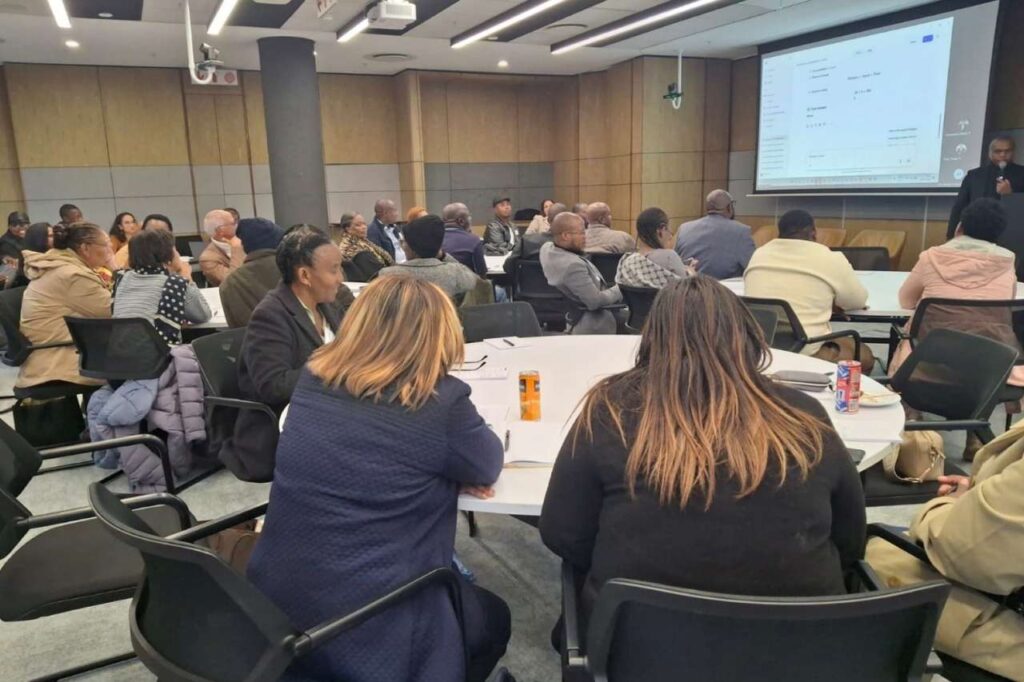
AI vs school leadership Artificial Intelligence (AI) is often spoken about in sweeping extremes; transformation, disruption, replacement or rescue. Step into a school, however, and that rhetoric loses its shine. Inside schools, the work is pragmatic. Leaders are already managing immense pressure, from overcrowded classrooms and infrastructure challenges to inconsistent digital access and rising administrative demands. In May, Citizen Leader Lab and Deloitte Africa convened a working session as part of Deloitte Africa’s annual Volunteer Day, to explore what AI already looks like inside the daily reality of school leadership. Rather than treating AI as a threat or panacea, participants approached it through the challenges schools already face – how AI might reduce administrative burden, support decision-making and strengthen existing systems without replacing human judgement? CEO of Citizen Leader Lab, Komala Pillay, connected the purpose of the session to the organisation’s broader leadership mission. “We are all about leadership,” she explained. “We know leaders can change the world for the better or for the worse. But as an organisation, we have the opportunity to work with ethical, conscious leaders who want to make a positive difference. This is what gives us hope for our country.” She added these spaces matter because they allow leaders to learn from one another and engage honestly with the pressures affecting them. The technical session was facilitated by Thabo Tladi, AI and Data Manager at Deloitte Africa, whose work spans the mining, telecommunications, banking, oil and gas sectors. Tladi’s presentation focused on demystifying generative GenAI, explaining both its evolution and its limitations. “Humans have always looked for ways to automate work and reduce burden,” Tladi noted. “AI has existed for a very long time in different forms. Predictive text is one example. Through pattern recognition, your phone predicts what you are likely to type next. But it is important to remember that through all of this, AI has no consciousness.” Participants explored the different GenAI modalities currently available and the range of outputs these systems can produce, from text and images to video, audio and code. Discussions also examined where AI can add value when used responsibly: Improving efficiency, automating repetitive tasks and supporting creativity. At the same time, the session did not avoid the risks. Tladi spoke about the limitations of Large Language Models (LLMs), including hallucinations, misinformation and the absence of built-in fact-checking mechanisms. The emphasis throughout remained on responsible use, critical thinking and human oversight. The conversation became particularly dynamic during the discussion sessions, where educators and school leaders reflected on how AI is already entering classrooms and administrative systems. Richard Mapike, an English teacher at the John Orr School of Specialisation, spoke about how many of his learners travel long distances to school and return home with limited time for homework. He explained that AI has helped him compile additional learning resources, generate educational games and create more engaging homework activities. “As the creator using AI, I’m able to monitor progress,” Mapike said, adding that lessons often “stick better” when learners engage with AI interactively. At the same time, he cautioned against overreliance. “AI should not suspend thought,” he said. “The human aspect is still very relevant.” Principal of Laerskool Jim Fouche, Robertson Mabaso, shared that he has begun using GenAI tools to assist with administrative communication. He noted that it has been especially useful when navigating sensitive communication with parents. “It helps you find the right words and the right tact,” he explained. Meanwhile, UJ Academy mathematics teacher, Deepa Gopal, reflected on a challenge increasingly familiar to teachers globally – learners are often enthusiastic about using AI tools, but do not always understand the reasoning behind the answers generated. “They may arrive at the correct answer,” Gopal explained, “but they do not necessarily comprehend how they got there.” Participants discussed other practical applications, including the use of AI to support timetable construction, reduce scheduling conflicts and setting examination papers. The consensus was that while AI can be extremely useful, outputs are often generalised and still require substantial human refinement to become contextually relevant for schools. The session concluded with a practical case study on how to effectively prompt AI tools to extract the best possible response to a given request. This case study was delivered by Petros Hatzipanis, a Business Intelligence and Information Engineering professional associated with Deloitte Africa. As AI continues to enter workplaces across sectors, education will inevitably continue to evolve alongside it. If the session demonstrated anything, it is that responsible implementation will depend less on the technology itself and more on the quality of leadership and human thinking guiding its use.
Leadership, interrupted: Youth Day edition
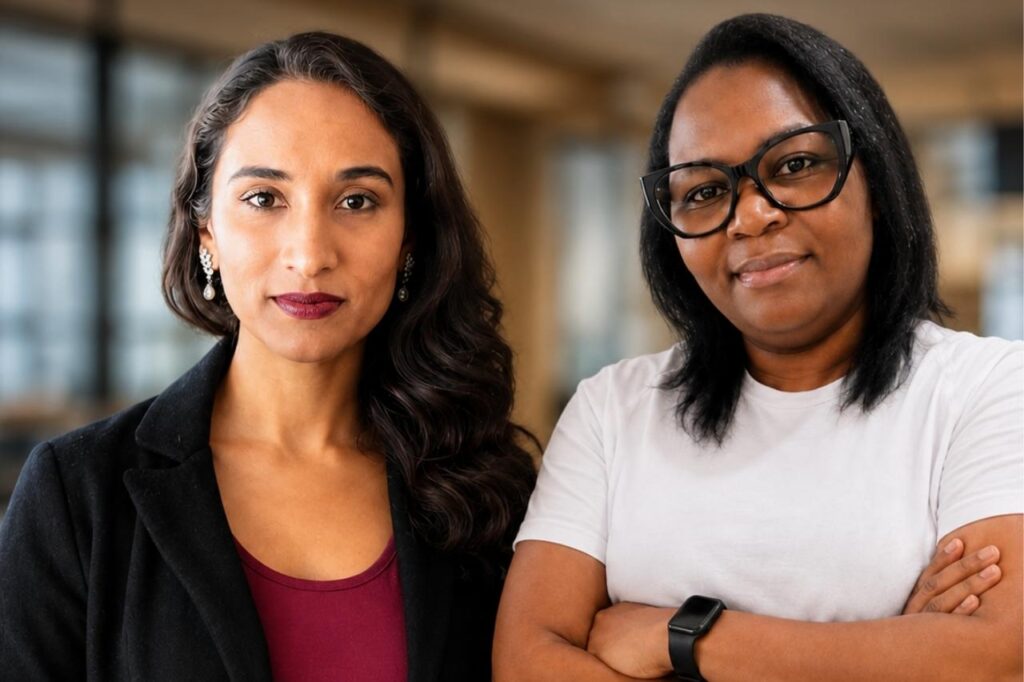
Leadership, interrupted: Youth Day edition Two Citizen Leader Lab team members join the DGMT Fellowship this July As part of Youth Month, we have profiled Dipuo Mafatle and Zah’Rah Khan, who have both been selected for the DG Murray Trust Fellowship, a highly regarded, cohort-based leadership programme that brings together professionals from across sectors to engage with complex social and organisational challenges through structured dialogue, reflection and peer learning. Their selection is particularly noteworthy given the competitiveness of the process, which attracted 64 applications from across the country. Rather than a traditional training programme, it is designed as a developmental journey that exposes participants to different perspectives and ongoing reflection. The focus is on how leaders understand and make sense of their contexts, rather than only how they operate within them. As part of the Fellowship experience, the two team members will also collaborate on a joint project to translate insights from the programme into practical learning and value for Citizen Leader Lab. Ahead of the programme commencing in July, we spoke to Dipuo and Zah’Rah about their expectations, and what this moment represents in their work at Citizen Leader Lab. What drew you to the DMGT Fellowship, and why does it feel relevant to you at this point in your life? Dipuo: I was drawn to the DGMT Fellowship because it offers an opportunity to learn alongside people from different backgrounds who are all committed to making a positive contribution in their communities and organisations. I am naturally curious about leadership, personal growth, and how people can work together to address complex challenges and this Fellowship seems like a space where those conversations can happen in a meaningful way. Zah’Rah: I see this Fellowship as both a pause and a provocation for how I work going forward. It is also an opportunity to step outside the immediacy of daily work and think more critically about leadership and its impact. At this point in my life, I’m interested in developing how approach my work, not just accelerating productivity. Our work at Citizen Leader Lab engages with complexity every day, and this felt like a chance to view those patterns with fresh eyes. The Fellowship brings together people from different sectors and backgrounds. What value do you see in learning in this kind of shared space? Zah’Rah: There’s something useful about being out of your own community, you know, where your usual shorthand doesn’t work. It makes you more conscious of the ideas and language you default to. It also stretches how you define problems and what you consider possible. This kind of friction is actually quite familiar at Citizen Leader Lab. Our work regularly brings together people from all walks of life. The value of a space like this is not necessarily in finding consensus, but in being challenged by different ways of thinking and then returning to your own context with a clearer sense of what needs to change, and what still holds true for you. Dipuo: One of the things that excites me most about the Fellowship is the opportunity to engage with people whose experiences, perspectives and areas of expertise are different from my own. We often approach challenges through the lens of our own work and background, but some of the most valuable insights come from hearing how others think about and respond to similar issues. Many of the challenges facing our communities and organisations are complex and interconnected, which makes collaboration across sectors especially valuable. As you begin this process, what is one idea about leadership that you are open to rethinking? Dipuo: One idea about leadership that I am open to rethinking is the belief that strong leaders should always appear confident and certain. For a long time, I associated leadership with having clear answers, making decisive decisions and projecting confidence at all times. As I have gained more experience, I have started to realise that leadership often involves navigating uncertainty, asking difficult questions and being willing to acknowledge what you do not know. I hope the experience will challenge my assumptions and help me better understand how authenticity, curiosity and adaptability contribute to meaningful leadership. Zah’Rah: I am open to rethinking leadership as something that rests primarily in individuals or formal roles. Much of my experience suggests leadership is often distributed. I want to explore how leadership shows up in that less ‘’conventional’’ sense. This includes creating the conditions for others to lead. Citizen Leader Lab’s work is a prime example of this, especially in schools where leadership often shows up in unexpected ways. I want to interrogate how much we over-index on positional leadership and under-value the less obvious forms that actually keep systems, institutions and communities together. Beyond your own development, how do you think this experience might influence the work of Citizen Leader Lab? Zah’Rah: I hope the experience will bring new perspectives into how we think about leadership development. Citizen Leader Lab is already part of a rich ecosystem of leadership practice, and this Fellowship offers a different angle to interpret it. I’m particularly interested this exposure might strengthen our storytelling, as well as our and monitoring and evaluation work. Dipuo: There is value in exploring how leaders and organisations in different sectors approach leadership development, partnership and community engagement. The opportunities and challenges they encounter may provide useful insights for the work we do and help me look at aspects of our work from different angles. This could influence the questions I ask, the contributions I make in discussions with colleagues, and the way I engage with programme participants. What does leadership that responds to today’s challenges look like to you, especially for young people and future leaders? Dipuo: I believe that authenticity and humility are important qualities for future leaders. People are more likely to trust and engage with leaders who are genuine, willing to listen and open to learning from others. For young people and future leaders, this means developing
Reflections from the CEO: How do we maximise return on CSI spend?

Reflections from the CEO: How do we maximise return on CSI spend? The recent Trialogue conference reinforced a growing conviction for me: Maximising the return on our CSI spend is less about how much we invest, and more about how intentionally we create value from it. With R13 billion in CSI funding deployed last year, we are not short of capital. The more honest question is whether we are using it in a way that meaningfully shifts outcomes for South Africans or whether our current, fragmented and competitive approaches are limiting our collective impact. A recurring theme at #BIS2026 was clear: Collaboration is the greatest lever we have to unlock more value from CSI investment. Yet, we continue to resist it, often defaulting to “collaboration is hard.” But what is really hard? Yes, we experience discomfort in our boardrooms. On a regular basis, funders and NGOs are having to navigate power relationships, trust, shared decision‑making, pace and sacrificing individual control or recognition. This is not easy. But it doesn’t compare to the lived reality of the communities we aim to serve, where children are facing hunger, poor education outcomes and systemic inequality every day. If we are serious about truly addressing inequality and poverty in our country, we need to reframe collaboration not as a burden, but as a strategic imperative. That means: Moving beyond fragmented funding to coordinated, ecosystem-based approaches Investing time in relationships and trust-building across corporates and NGOs Co-creating solutions, rather than funding in silos Accepting the trade-offs such as slower decisions and shared ownership as necessary costs of greater impact Taking calculated risks on new models that can scale change The uncomfortable truth is that collaboration feels “hard” because it asks more of us. But the cost of not collaborating is far greater. Diluted impact, duplicated effort and missed opportunities are only pushing out #TheFutureWeWant further and further into the future. If we want maximum return on our CSI spend, we must choose to work differently and more courageously together. Because ultimately, as veteran social justice and philanthropy leader, Lorenzo Davids, aptly said, “The future we fund is the future we get”.
“We have Learned, Acted and Continue to Become Great Leaders’’

“We have Learned, Acted and Continue to Become Great Leaders’’ Citizen Leader lab, a Public Benefit Organisation that develops leaders in the public and private sectors, celebrated the conclusion if its Leaders for Education cohort in Tshwane The Leaders for Education programme pairs public school principals with private sector leaders for 12 months. School principals benefit from enhanced confidence and leadership skills, while business leaders learn by navigating the complexities of the South African public schooling system. The cohort grew in leaps and bounds under the guidance Dr Mariette Myburgh, a seasoned Transformation Strategy Advisor, Life and Executive Coach and Mediator. In the presence of colleagues, Department of Education district officials and the Citizen Leader Lab team, the participants shared how they were able to develop their own leadership skills, collaborate effectively and ultimately apply these learnings to improve their schools and workplaces. The principal of Hoerskool Staatspresident C.R Swart, Susan Theron, said that her the Leaders for Education experience has helped her ‘’function as a better leader’’. ‘’The programme has changed the way I listen and communicate, specifically with my School Management Team (SMT). I have been able to impart the leadership skills I gained to them. This has empowered them to be involved in decision making at the school, where as previously, they were not used to this. This has fostered new-found respect and appreciation for each other,’’ Theron said. Theron was partnered with Beverley Ngoako, a Control Room Manager for EKS Vehicle Tracking. The business leader said that she relished the opportunity to extend her professional network. She added the programme has also allowed her to bridge the ‘’disconnect between herself and her subordinates’’. ‘’Being here allowed me to meet people from different industries. As a female leader, I admit that sometimes I feel isolated. Here, I became part of group of leaders I knew I could always lean on. I have also learnt that as much as I want to achieve my professional goals, showing empathy for my team is key,’’ Ngoako explained. The pair, together with the school’s teachers and learners, were able to establish a vegetable garden to supplement the school’s government-run feeding scheme. For the principal of Mapenane Secondary, Lydia Moseki, the Leaders for Education workshops helped her learn the art of effective delegation. ‘’I have planted a seed of working independently. My team now feels confident to do this because I am able to delegate,’’ Moseki said. Moseki’s business leader partner, Brendan Fernandez, feels he has been able to ‘’leverage the strength of his partnership and the entire cohort’’. Fernandez, who is the Founder and CEO at Graf-in Tech, said: ‘’The whole experience was very practical – from gaining listening skills, understanding the importance of showing appreciation and including all voices. My relationships with my team, customers and even my family have vastly improved.’’ As a School of Specialisation focused on STEM subjects, Mapenane’s learners are always eager to apply their knowledge of mathematics and science to assist vulnerable community members. Moseki explained that Fernandez contributed to the school’s latest project to improve the lives of the blind. He also was instrumental in setting up a dashboard to monitor the school’s academic progress. ‘’The learners came up with the SMART Blind Stick, with has sensors to help the blind navigate their environments. They also created ‘Goggles for Gogos’, which also has sensors to detect obstacles. The dashboard is data-driven, which allows us to drive improvement in the pass rates,’’ Moseki said. Johan Kleu, an Executive Head at Momentum Health, elaborated on his ‘’biggest leadership lesson’’ during his 12-month journey. ‘’In the corporate sector, I can easily control resources, including access to human resources. Being on the Leaders for Education programme, I realised that I had to work ‘through’ my principal partner, not ‘over’ her,’’ Kleu said. The business leader worked with Rabia Nuruddin, the principal of Laerskool Generaal Beyers. Together, they focused on four areas of improvement at the school: Obtaining buy-in from the School Management Team, infrastructure improvements to make the school more functional and attractive, and instilling values in the learners. Martha Gladwin, the principal of St Annes Primary, praised Citizen Leader Lab for the platform it provided to develop her own and her fellow participants’ leadership skills. ‘’I regarded myself as a good leader, but after this programme, I now believe that I am great leader. Referring to Citizen Leader Lab’s tagline, I do believe that we have Learned, Acted and continue to Become great leaders,’’ Gladwin expressed. The celebration concluded with words of gratitude and encouragement from Citizen Leader Lab’s Regional Manager for Gauteng, Audrey Jones. ‘’Leaders for Education is successful because it takes active citizens, like you, to collaborate across sectors. With this spirit, I believe we can shift the dial in our country. I encourage all the school principals and business leaders of this cohort to continue to work together beyond the formalised programme,’’ Jones said. About Citizen Leader Lab Citizen Leader Lab, a leadership development and support Public Benefit Organisation, is dedicated to creating resilient leaders in both the public and private sectors. Our vision is Leadership that builds a better future for all. We offer a variety of programmes and workshops that work towards large-scale social change in South Africa, that empower individuals to be effective leaders and change agents in their communities. With over 14 years of experience, we continue to grow our presence in the education sector and extend our influence into critical public sectors, promoting cross-sector collaboration, active citizenship and social cohesion.
Overberg Celebrates Impact and Welcomes New Beginnings

Overberg Celebrates Impact and Welcomes New Beginnings In August, Overberg kicked off an exciting new chapter with the launch of its second Leaders for Education cohort and celebrated the success of its first The Overberg community marked the start of a new cohort of school principal-business leader partnerships supported by Citizen Leader Lab, a Public Benefit Organisation committed to leadership development across the public and private sectors. Through the organisation’s Leaders for Education programme, selected public school principals and business leaders from Overberg have now embarked on a 12-month leadership journey designed to address the specific challenges faced by their schools. The Leaders for Education programme was founded on the belief that sustainable improvement in schools requires innovative solutions from both the public and private sectors. By pairing experienced business leaders with dedicated school principals, the programme facilitates an immersive exchange of leadership skills and ideas. This collaboration is reciprocal—a dynamic partnership where both parties learn and grow together, as they bring their unique strengths to the table. The programme’s design allows for a deep dive into the issues that matter most to the schools involved, with a focus on creating solutions that lead to lasting change. Participating schools come from three municipalities including the Cape Agulhas Municipality. Endorsed by three circuit managers* and reaching approximately 10,715 learners and 343 educators, the programme has garnered enthusiastic backing from the Overberg District Office for education. The impact is expected to ripple beyond the participating school principals. As they implement the strategies and insights gained from their partnerships, the benefits will extend to their teaching and support staff, and ultimately, to the learners themselves. For the business leaders involved, this partnership offers a unique opportunity to refine their leadership skills in a new and challenging environment. Jessica Batts, the Life, Leadership, Executive and Wellness Coach facilitating the partnerships, remarked: “The launch of this second cohort represents a continuation of a journey towards change that is driven by collaboration, innovation and a shared vision to making a difference in the lives of learners.” Arina Fyfer, a business leader from the region’s first Leaders for Education cohort, co-hosted the launch. As this new cohort began their leadership journey, Overberg’s inaugural cohort celebrated a year of relationships, collaboration and impact. Though the morning was chilly, the beauty of the Elgin Valley, nestled high in the mountains between the Cape vineyards, provided a stunning backdrop for the celebration. Attendees explored the picturesque venue, enjoyed a lovely breakfast and listened to inspiring stories of impact. The gathering was a celebration of the collective efforts of the school principals and business leaders who, over the course of a year, drove change in their schools, businesses and communities. Among the guests were two circuit managers, the chairperson of the Hermanus Business Chamber and the Group HR Director of Two-A-Day, the largest employer in the Grabouw Valley. The two circuit managers, who had the final word at the event, expressed immense pride in the accomplishments of the principals and business leaders, underscoring the importance of Citizen Leader Lab’s work in creating #TheFutureWeWant. *Circuit managers are the closest point of contact between school principals and districts. Their role is to manage principals and schools, and their responsibilities include leading and providing managerial, administrative and technical support, as well as resources and curriculum support.
Free Virtual Financial Management Series to Empower School Principals and Bursars

Free Virtual Financial Management Series to Empower School Principals and Bursars Citizen Leader Lab is thrilled to partner once again with Deloitte Africa to present the latest instalment of the Financial Management Series designed specifically for school principals and bursars. Following the success of previous sessions, this new session will delve deeper into vital aspects of financial management to enhance school leadership and administration. The free virtual session is set to take place on Tuesday 3 September, starting at 3pm. Deloitte Africa has developed these modules to tackle the complex financial challenges faced by school principals and bursars. Three pertinent topics will be addressed during this session: Budgeting: A well-structured budget is essential for the financial health of schools. The session will cover how to create a detailed financial plan to track and allocate funds effectively. Participants will also learn the importance of continuously monitoring budgets to ensure actual performance aligns with forecasts. Interpreting and Presenting Financial Statements: Accurate financial statements are key to maintaining transparency. The session will guide participants through the preparation and interpretation of financial statements, and how to present these documents clearly to stakeholders. Preparing for the Annual General Meeting (AGM) with Parents: The AGM is a significant event for discussing financial performance and future plans. This session will help principals align financial details with the School Governing Body, communicate financial results to parents and outline future goals and expectations. Dorcas Dube – Londt, Marketing and Communications Manager at Citizen Leader Lab, said: “Budgeting, financial statement analysis and AGM preparation are crucial skills for any school principal and bursar. These competencies not only ensure transparent and strategic management of school finances but also engender trust and encourage engagement with the school community. Citizen Leader Lab’s ongoing collaboration with Deloitte Africa aligns perfectly with our commitment to developing school leaders holistically. By equipping principals and bursars with these essential skills, we are supporting their growth in all dimensions of leadership and enabling them to lead their schools with greater confidence and clarity.’’ RSVP: https://tinyurl.com/2ped53yf or email melissa@citizenleaderlab.org
Public-Private Partnerships to Transform Schools, Businesses and Communities in Polokwane

Public-Private Partnerships to Transform Schools, Businesses and Communities in Polokwane Citizen Leader Lab, a leading Public Benefit Organisation committed to leadership development in both the public and private sectors, launched its Leaders for Education programme in Polokwane, Limpopo, this August. This transformative programme brings together business leaders and public school principals in a unique collaboration to tackle challenges in schools in the region. The Leaders for Education programme is built on the premise that sustainable improvement in schools require innovative solutions from both the public and private sectors. By pairing experienced business leaders with dedicated school principals, the programme aims to create an immersive and reciprocal exchange of leadership skills and ideas. Over the next 12 months, selected public school principals and business leaders from Polokwane will embark on a journey designed to address the specific challenges faced by their schools. This collaborative effort is expected to not only positively impact participating school principals, but also their respective teaching and support staff and learners. For the business leaders, this partnership is a platform to refine their leadership skills in a new and challenging environment. Simon Nkuna, the principal of Kaputla Nkoana Primary in Mashobohleng, Moletji, shared what he hopes to achieve in the next 12 months with Citizen Leader Lab: “Through this programme, I wish to see improvements in our school’s results, particularly in challenging areas like social sciences and mathematics. My goal is to ensure that the knowledge and skills that I gain are effectively shared with my educators and support staff. This, in turn, will help address our current issues and positively impact the wider school community. I am excited about the potential for progress.’’ Thakgatso Morepye, who is currently an Honours student in Psychology and the Client Experience Manager at Mediclinic, Limpopo, described her participation in the Leaders for Education programme as ‘’truly a privilege’’. She added: ‘’I recognise the need for mental health awareness within our communities, particularly among school principals. These leaders juggle numerous roles, often neglecting their own mental well-being. This programme will not only allow me to support them in managing their responsibilities more effectively, but will also offer me insights into their challenges, contributing to my own growth as a leader. It’s an initiative that promises significant benefits for school principals, business leaders and our communities.’’ Strategic Leadership Development Specialist and Facilitator, Anorth Mabunda, will play a crucial role in the programme, providing expert guidance to nurture the leadership skills of the participants and ensuring the success of their collaborative efforts. Citizen Leader Lab is committed to expanding the Leaders for Education programme, partnering more public school principals and business leaders to continue addressing educational challenges in Limpopo. To support or participate in future initiatives, please contact Audrey@Citizenleaderlab.org.
From Mines to Minds

With a career deeply rooted in mining, Dave Morris has performed a variety of roles that span a wide spectrum of the industry. As a metallurgical engineer by training, he has led teams in production environments, and has had stints in operational start-up projects, business development, acquisitions, disposal and safety, sustainable development and business improvement. His diverse experiences have shaped his comprehensive understanding of business strategies, paving the way for his current endeavours. Seven years ago, I retired from the mining industry and embarked on a new journey with Citizen Leader Lab. I participated in their Leaders for Education leadership development programme that creates partnerships between business leaders and school principals. A chance encounter in the corridors of Anglo American where I worked at the time and where I first heard about the programme inspired this transition. Intrigued, I attended an information session which solidified my decision to participate and have my own experience of the programme. With support from Anglo American, I dove headfirst into this new opportunity. My involvement in education is not new; it dates back to the mid-90s where I was involved in Anglo’s initiatives focused on developing leadership and communication skills in young people. However, I sought to broaden my impact beyond sector-specific projects to a more comprehensive approach and one more focused on developing social capital. It is this desire that led me to formalise my efforts in education through Citizen Leader Lab. I’ve participated in many leadership courses, but for me, the Leaders for Education programme stood out. Unlike traditional, short-term training, this programme creates lasting change by emphasising relationships and hands-on involvement in real-world settings. This approach equips business leaders with the skills and perspectives needed to drive meaningful change in their organisations and communities. Engaging with this programme not only enriched my understanding of leadership, but also mobilised my transferable skills for the greater good. The impact of these efforts has extended beyond immediate outcomes – it has inspired others to continue a cycle of positive change. I also understand and appreciate the profound impact of a quality education. Growing up in rural UK, access to a quality school and the provision of everything from textbooks to transportation, at virtually no cost, ensured equal opportunities for all learners. This continued into tertiary studies. This starkly contrasts with the current state of education in many parts of the world, including South Africa. Advocating for every child Every year, Citizen Leader Lab, in partnership with Sphere Holdings, hosts its exclusive Execs Back to School event. Now in its fifth year, this highly anticipated event brings together business leaders and school principals for a day of meaningful dialogue, collaboration and action. The Execs Back to School immersive experience offers business leaders an opportunity to understand the impact of being in a partnership with a school principal before committing to participating the more intensive, year-long Leaders for Education programme. It highlights the impact of building social capital, developing community and leading in a different way. This year, the event will pose a critical question to business leaders: Are the challenges in South Africa’s education system affecting your bottom line? Business leaders certainly recognise the long-term implications of an inadequate education system on their future workforce and overall business sustainability. That said, it is not always easy to make a sustainable impact. For business leaders, especially those in top positions, understanding and addressing the quality of education is crucial. The changing nature of work demands a workforce equipped with future-ready skills. By participating in events like Execs Back to School, business leaders can take that first step to influence the system, ensuring a sustainable pipeline of skilled talent for their businesses. Rewired not Retired After almost 40 years in the mining industry, I am now firmly focused on contributing to socially oriented organisations like Citizen Leader Lab, where I serve as a member of the organisation’s board. For business leaders contemplating retirement, this is my take-away: Participating in structured programmes like those by Citizen Leader Lab offers a blend of obligation and fulfilment, ensuring continued personal growth and societal contribution. Taking a break is essential, but it is equally important to commit to something that provides a sense of purpose. Ultimately, all business leaders must ponder the broader purpose of their enterprises and the full spectrum of their impact. Engaging with socially focused organisations not only benefits the community but also strengthens the foundations of their businesses. My journey from mining to minds underscores the transformative power of applying business acumen to social challenges. By embracing new roles and responsibilities, business leaders can drive meaningful change. It is time for business leaders to embrace the challenge, extend their time horizons and commit to shaping a better future through their contribution to leadership development and education. About Citizen Leader Lab Citizen Leader Lab, a leadership development and support Public Benefit Organisation, is dedicated to creating resilient leaders in both the public and private sectors. Our vision is Leadership that builds a better future for all. To this end, we offer a variety of programmes and workshops that work towards large-scale social change in South Africa, that empower individuals to be effective leaders and change agents in their communities. With over 14 years of experience, we continue to grow our presence in the education sector and extend our influence into critical public sectors, promoting cross-sector collaboration, active citizenship and social cohesion.
The Grit, Grace, Gender and Race of Leadership

The Grit, Grace, Gender and Race of Leadership Dr Sharon Munyaka, a registered Industrial and Organisational Psychologist with the Health Professions Council of South Africa (HPCSA), reflects on how understanding grit, grace, gender and race have been integral to the distinct leadership approach which has transformed both her practice and workplace behaviour Throughout her more than 20-year career, Dr Munyaka has designed and delivered innovative programmes that have supported leadership teams in maintaining focus and productivity during challenging times. These strategies have enhanced the mental, emotional and physical well-being of a number of South African organisations. When Gender and Race Collide At one point in my career, I had moved from the Eastern Cape to Gauteng. This introduced me more intimately to the pervasive biases and systemic barriers faced by women. Balancing multiple roles and combating the persistent erasure of women’s contributions due to intersecting factors of race and gender was challenging. I recall an anecdote from my coaching practice that still makes me smile. A mature, black, male client arrived for an appointment, only to find me, a younger black female. He vehemently objected to being “coached by a child.” I asked him to consider whether the very thing that made him uncomfortable might be the reason he needed the coaching appointment. I invited him to stay for at least two coaching sessions before deciding on the matter. He completed all the scheduled coaching sessions, ultimately expressing gratitude for the transformation he experienced. Although women are better represented in the workplace today, much remains to be done to address the systemic biases and prevailing lack of recognition that deter women from aspiring to key organisational roles. For instance, evidence shows that women-led schools provide learners and staff with safer, more collegial learning environments. However, men predominantly hold leadership positions in schools, even when women are better qualified. Cultural beliefs casting doubt on women’s abilities to lead, and the lack of role models and mentorship, leave aspiring female principals feeling isolated. The Grit and the Grace Leaders, regardless of gender and race, should work towards the creation of safe, inclusive and supportive environments where women can aspire to and excel in leadership roles. Grit without grace is not useful because, while determination and perseverance are vital for overcoming challenges, they alone can lead to a harsh, relentless leadership style that overlooks the importance of empathy and human connection. Without grace, grit can create an environment of fear and burnout, where individuals feel undervalued and demotivated. Grace tempers grit with compassion, enabling leaders to balance firm resolve with understanding and kindness. This balance is essential for maintaining morale, collaboration and ensuring long-term success. In essence, grit drives action, but grace ensures that these actions are sustainable and inclusive, creating a positive affect both on individuals and on the organisation as a whole. Grace in leadership is crucial for the future because it inculcates a culture of empathy, respect and resilience – essentials for navigating the complexities of today’s world. Graceful leadership encourages open communication and collaboration, allowing organisations to adapt swiftly to change and innovate effectively. It also promotes a sense of psychological safety, enabling employees to take risks and learn from failures without fear of retribution. Embracing New Opportunities My recent appointment to the University of Cape Town Council and my role as a Board Member of Citizen Leader Lab have further reinforced my commitment to fostering transformational leadership across various sectors. These roles allow me to advocate for inclusivity and empower voices to effect enduring change. In 2017, I was partnered with Principal Nombuyiselo Magwentshu from Hombokazi Primary in Kariega, Eastern Cape. This experience with Citizen Leader Lab brought the challenges faced by public schools in South Africa into sharp focus for me. Collaborating with a school principal became the start of a renewed personal commitment to leadership development and education – two areas that matter deeply to me. In 2024, Citizen Leader Lab continues to expand its efforts with programmes aimed at strengthening leadership in School Management Teams and even municipal leaders. The future of leadership lies in understanding the interconnectedness of gender and race, and the delicate balance of grit and grace. About Citizen Leader Lab Citizen Leader Lab, a leadership development and support Public Benefit Organisation, is dedicated to creating resilient leaders in both the public and private sectors. Our vision is Leadership that builds a better future for all. We offer a variety of programmes and workshops that work towards large-scale social change in South Africa, that empower individuals to be effective leaders and change agents in their communities. With over 14 years of experience, we continue to grow our presence in the education sector and extend our influence into critical public sectors, promoting cross-sector collaboration, active citizenship and social cohesion.
Inspiring Change: Citizen Leader Lab Completes its Leadership Programme in Secunda

Citizen Leader Lab, a Leadership Development and support Public Benefit Organisation, celebrated the successful completion of its second Leaders for Education cohort in Secunda this July. By pairing public school principals with private sector business leaders, the Leaders for Education programme is designed to improve the confidence, competence and leadership skills of participating principals. Participating business leaders are able build their leadership skills and gain insights through involvement in the unfamiliar complexity of a public school. The year-long programme was initially set to be facilitated by the late Bongi Ndimande, an accredited Executive Coach. After Ndimande’s passing in 2023, Coach and Consultant, Anita Moerman van Blankenburg stepped in to facilitate the programme, ensuring its continued success and impact. School principals share their achievements The event featured heartfelt testimonials, showcasing the programme’s positive influence on both participants and their respective schools, businesses and communities. Priscilla Masombuka, Principal of Allan Makhunga Primary, was able to not only develop her leadership skills during her participation, but also applied these skills to bring hope to a learner during a difficult time. ‘’The negotiation skills I gained proved to be very helpful. In May this year, a learner’s home was burnt down. Because I was able to effectively engage with the taxi association in my area, they are now about to build a five-roomed, furnished house for this learner and their family,’’ Masombuka said. The principal of Sizwakele Secondary, Sefako Moemisi, emphasised the importance of being a team player. ‘’I no longer ‘hold’ meetings with my School Management Team and staff. They have been empowered to lead meetings because I have been empowered to delegate effectively,’’ Moemisi said. Moemisi added that the Leaders for Education programme has given him the skills to communicate with the school’s stakeholders to build the school’s infrastructure and empower the surrounding community. ‘’The parents have since come together to help establish a computer centre at the school. We are uplifting our parents with small businesses by teaching them how to use the internet and social media to market their businesses,’’ Moemisi explained. In praise of the Leaders for Education programme, Nkosinathi Ntshalintshali, the principal of Muzimuhle Primary, spoke about the programme’s application in real-world settings. ‘’I have learnt how to deal with the school’s challenges in a practical manner. For instance, the school has always had a challenge with flooding when it rains heavily. Through the partnership with my business leader, we have been able to pave the areas prone to flooding,’’ Ntshalintshali said. Business leaders reach their potential Bivocational Priest, Simon Zamisa, believes that the programme placed ‘’a demand’’ on his ‘’potential’’. ‘’My time with Citizen Leader Lab has proved that in order to add value to our communities, we do not need large sums of money. We have proved, as a group of school principal and business leader partnerships, that we can consolidate wishes into action,’’ said Zamisa. Business Improvement Concept Developer at BELVIC Services, Makhekhe Mokoena, has learnt that the key to delegation is ‘’empowering your team and trusting their skills’’. ‘’All this, I believe, has bolstered my ability to facilitate tasks and bigger projects at work,’’ Mokoena said. Director of MOCO Steel Secunda, Tasneem Edross-Gamieldien, appreciated the opportunity to be part of a learning network of school principals and business leaders. ‘’Over the year, we shared our victories and loses in our personal and professional lives. This is a testament to the authenticity of the connections we have formed. Platforms like Citizen Leader Lab are so important, because it is so easy to get lost in the mechanics of own lives. This is how we can all come together to make a change – if not for us, for future generations,’’ Edross-Gamieldien said. The Future of Secunda Citizen Leader Lab’s Regional Manager for Secunda, Audrey Jones, expressed her excitement for the future expansion of the Leaders for Education programme in the region. ‘’Going into 2025, Citizen Leader Lab remains committed to supporting and expanding the Leaders for Education Programme, with the goal of empowering more leaders and creating lasting change in Secunda. To achieve this, we need the support of funders and partners. This support is crucial in helping us continue to provide these valuable opportunities for growth and development in Secunda,” Jones emphasised. About Citizen Leader Lab Citizen Leader Lab, a leadership development and support Public Benefit Organisation, is dedicated to creating resilient leaders in both the public and private sectors. Our vision is Leadership that builds a better future for all. We offer a variety of programmes and workshops that work towards large-scale social change in South Africa, that empower individuals to be effective leaders and change agents in their communities. With over 14 years of experience, we continue to grow our presence in the education sector and extend our influence into critical public sectors, promoting cross-sector collaboration, active citizenship and social cohesion.
