
Leadership, interrupted: Youth Day edition
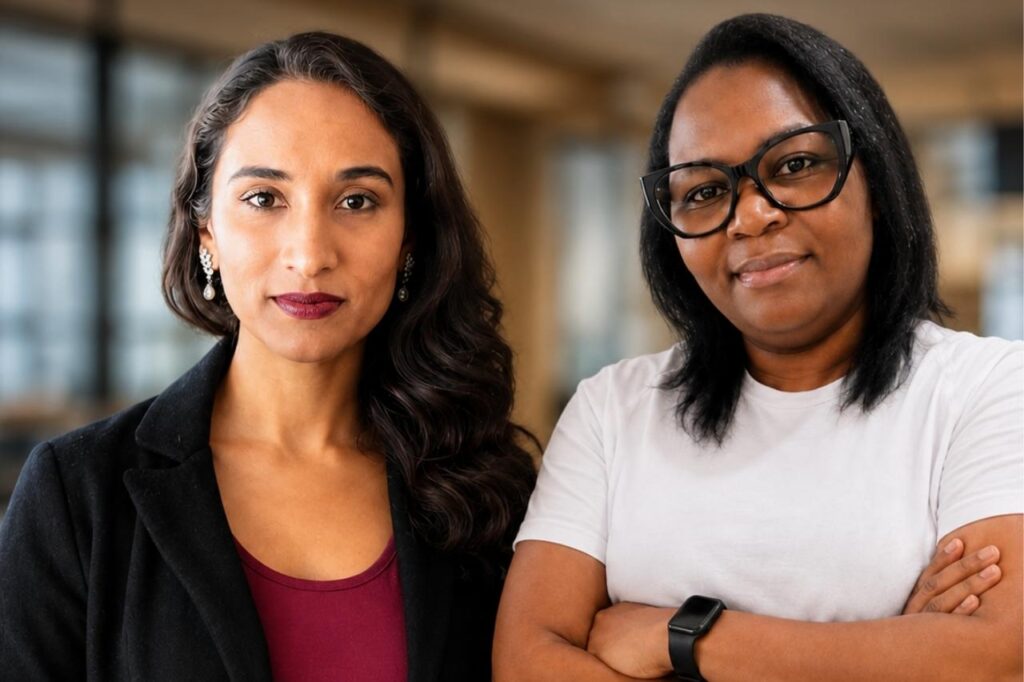
Leadership, interrupted: Youth Day edition Two Citizen Leader Lab team members join the DGMT Fellowship this July As part of Youth Month, we have profiled Dipuo Mafatle and Zah’Rah Khan, who have both been selected for the DG Murray Trust Fellowship, a highly regarded, cohort-based leadership programme that brings together professionals from across sectors to engage with complex social and organisational challenges through structured dialogue, reflection and peer learning. Their selection is particularly noteworthy given the competitiveness of the process, which attracted 64 applications from across the country. Rather than a traditional training programme, it is designed as a developmental journey that exposes participants to different perspectives and ongoing reflection. The focus is on how leaders understand and make sense of their contexts, rather than only how they operate within them. As part of the Fellowship experience, the two team members will also collaborate on a joint project to translate insights from the programme into practical learning and value for Citizen Leader Lab. Ahead of the programme commencing in July, we spoke to Dipuo and Zah’Rah about their expectations, and what this moment represents in their work at Citizen Leader Lab. What drew you to the DMGT Fellowship, and why does it feel relevant to you at this point in your life? Dipuo: I was drawn to the DGMT Fellowship because it offers an opportunity to learn alongside people from different backgrounds who are all committed to making a positive contribution in their communities and organisations. I am naturally curious about leadership, personal growth, and how people can work together to address complex challenges and this Fellowship seems like a space where those conversations can happen in a meaningful way. Zah’Rah: I see this Fellowship as both a pause and a provocation for how I work going forward. It is also an opportunity to step outside the immediacy of daily work and think more critically about leadership and its impact. At this point in my life, I’m interested in developing how approach my work, not just accelerating productivity. Our work at Citizen Leader Lab engages with complexity every day, and this felt like a chance to view those patterns with fresh eyes. The Fellowship brings together people from different sectors and backgrounds. What value do you see in learning in this kind of shared space? Zah’Rah: There’s something useful about being out of your own community, you know, where your usual shorthand doesn’t work. It makes you more conscious of the ideas and language you default to. It also stretches how you define problems and what you consider possible. This kind of friction is actually quite familiar at Citizen Leader Lab. Our work regularly brings together people from all walks of life. The value of a space like this is not necessarily in finding consensus, but in being challenged by different ways of thinking and then returning to your own context with a clearer sense of what needs to change, and what still holds true for you. Dipuo: One of the things that excites me most about the Fellowship is the opportunity to engage with people whose experiences, perspectives and areas of expertise are different from my own. We often approach challenges through the lens of our own work and background, but some of the most valuable insights come from hearing how others think about and respond to similar issues. Many of the challenges facing our communities and organisations are complex and interconnected, which makes collaboration across sectors especially valuable. As you begin this process, what is one idea about leadership that you are open to rethinking? Dipuo: One idea about leadership that I am open to rethinking is the belief that strong leaders should always appear confident and certain. For a long time, I associated leadership with having clear answers, making decisive decisions and projecting confidence at all times. As I have gained more experience, I have started to realise that leadership often involves navigating uncertainty, asking difficult questions and being willing to acknowledge what you do not know. I hope the experience will challenge my assumptions and help me better understand how authenticity, curiosity and adaptability contribute to meaningful leadership. Zah’Rah: I am open to rethinking leadership as something that rests primarily in individuals or formal roles. Much of my experience suggests leadership is often distributed. I want to explore how leadership shows up in that less ‘’conventional’’ sense. This includes creating the conditions for others to lead. Citizen Leader Lab’s work is a prime example of this, especially in schools where leadership often shows up in unexpected ways. I want to interrogate how much we over-index on positional leadership and under-value the less obvious forms that actually keep systems, institutions and communities together. Beyond your own development, how do you think this experience might influence the work of Citizen Leader Lab? Zah’Rah: I hope the experience will bring new perspectives into how we think about leadership development. Citizen Leader Lab is already part of a rich ecosystem of leadership practice, and this Fellowship offers a different angle to interpret it. I’m particularly interested this exposure might strengthen our storytelling, as well as our and monitoring and evaluation work. Dipuo: There is value in exploring how leaders and organisations in different sectors approach leadership development, partnership and community engagement. The opportunities and challenges they encounter may provide useful insights for the work we do and help me look at aspects of our work from different angles. This could influence the questions I ask, the contributions I make in discussions with colleagues, and the way I engage with programme participants. What does leadership that responds to today’s challenges look like to you, especially for young people and future leaders? Dipuo: I believe that authenticity and humility are important qualities for future leaders. People are more likely to trust and engage with leaders who are genuine, willing to listen and open to learning from others. For young people and future leaders, this means developing
Reflections from the CEO: How do we maximise return on CSI spend?

Reflections from the CEO: How do we maximise return on CSI spend? The recent Trialogue conference reinforced a growing conviction for me: Maximising the return on our CSI spend is less about how much we invest, and more about how intentionally we create value from it. With R13 billion in CSI funding deployed last year, we are not short of capital. The more honest question is whether we are using it in a way that meaningfully shifts outcomes for South Africans or whether our current, fragmented and competitive approaches are limiting our collective impact. A recurring theme at #BIS2026 was clear: Collaboration is the greatest lever we have to unlock more value from CSI investment. Yet, we continue to resist it, often defaulting to “collaboration is hard.” But what is really hard? Yes, we experience discomfort in our boardrooms. On a regular basis, funders and NGOs are having to navigate power relationships, trust, shared decision‑making, pace and sacrificing individual control or recognition. This is not easy. But it doesn’t compare to the lived reality of the communities we aim to serve, where children are facing hunger, poor education outcomes and systemic inequality every day. If we are serious about truly addressing inequality and poverty in our country, we need to reframe collaboration not as a burden, but as a strategic imperative. That means: Moving beyond fragmented funding to coordinated, ecosystem-based approaches Investing time in relationships and trust-building across corporates and NGOs Co-creating solutions, rather than funding in silos Accepting the trade-offs such as slower decisions and shared ownership as necessary costs of greater impact Taking calculated risks on new models that can scale change The uncomfortable truth is that collaboration feels “hard” because it asks more of us. But the cost of not collaborating is far greater. Diluted impact, duplicated effort and missed opportunities are only pushing out #TheFutureWeWant further and further into the future. If we want maximum return on our CSI spend, we must choose to work differently and more courageously together. Because ultimately, as veteran social justice and philanthropy leader, Lorenzo Davids, aptly said, “The future we fund is the future we get”.
Inside Tshwane North’s Bold Pilot for Collaboration and Change

Inside Tshwane North’s Bold Pilot for Collaboration and Change South Africa’s education sector has never been short of well-meaning interventions. Government, NPOs and the private sector each bring valuable resources and expertise. Yet too often, their efforts run in parallel, well-intentioned but fragmented, resulting in duplication in some areas and neglect in others. In Tshwane North this month, a new attempt was made to change that. The Tshwane North Education District, in partnership with the National Association of Social Change Entities in Education (NASCEE) and Citizen Leader Lab, convened a pilot to explore how district-level coordination might work in practice. The aim was not to add another programme to the pile. Rather, the focus was on testing whether a collaborative model, built on existing initiatives, could be developed and led by the District Partnership Team and eventually replicated in other districts. The architecture of change The keynote speakers framed collaboration as both a strategic necessity and a moral and policy imperative. As Gauteng Education Chief Director for Tshwane, Paula Galego, reminded participants, collaboration is not an optional extra. It is embedded in South Africa’s National Development Plan (NDP) and linked directly to the United Nations Sustainable Development Goal 4, which commits to ensuring inclusive and equitable quality education for all. Galego was candid about the gap between the principle and practice of collaboration: “What still doesn’t work is the existence of fragmentation, with organisations competing for resources and visibility. We need to address that.” This sentiment was echoed by Soso Motloung, Special Programmes Manager at the MTN Foundation, who stressed that while technology and resources are vital, they are less effective without alignment: “When there is collaboration and alignment, using the strength of government, the resources of the private sector and the grassroots insights of NPOs, we can achieve a lot.” Evidence and gaps The session included a celebration of contributions, accompanied by a candid look at the data. Sandra de Bruyn, Senior Education Specialist and member of the Tshwane North Partnership Team, highlighted the district’s reliance on partnerships to deliver services beyond the state’s immediate funding capacity, from zero-rated e-learning platforms to legal and advisory support for school principals. De Bruyn also acknowledged the persistent gaps, particularly in infrastructure: “There is a backlog of almost two years. The need for collaboration to close this gap is urgent.” District Director at the Gauteng Department of Education, Thea Coetser, grounded the discussion in district realities. She noted that while Tshwane North ranks among the top 10 districts nationally, with more than half of its matric learners achieving university exemption, significant challenges remain. “In the foundation phase (Grades 1–3), substantial work is still needed in literacy and numeracy. Other critical areas include Grade 8 and 9 mathematics, as well as early childhood development, which has now shifted from Social Development to Education. This provides a clearer picture of the district’s needs and highlights where collaboration is most needed.” For Lungile Zakwe, Chairperson of the NASCEE Board, the pilot’s significance lay in civil society stepping into alignment with government priorities. “Historically, the problem is that civil society’s work has been fragmented and not aligned with government goals. NASCEE exists to close this gap,” she said. This reflects the growing recognition that while government remains the primary duty-bearer, civil society and business must be complementary actors, not parallel ones. NASCEE’s efforts to build the capacity of its affiliates, Zakwe said, are part of creating a coherent, supportive, quality-assured ecosystem. Davina Murphy, Data and Analytics Lead at NASCEE, reinforced this with the unveiling of the National Education Directory, a platform mapping school-level needs and profiling organisations equipped to meet them. “If we describe the education system as a bus,” she said, “then everyone must be pushing in the same direction to move that bus forward.” Collaboration starts with connection The practical component of the event was an interactive workshop facilitated by Komala Pillay, CEO of Citizen Leader Lab and NASCEE board member, together with Dr Mariette Myburgh, a Citizen Leader Lab Facilitator. Drawing on Citizen Leader Lab’s leadership development methodology, the session combined constructive dialogue, shared reflection and collaborative problem solving. Participants wrestled with three questions: What is needed to increase collaboration? Trust, credibility and an “abundance mindset” were seen as prerequisites. Suggestions included dedicated collaboration roles in organisations, data-driven mapping and expanded networking opportunities. What first steps are necessary for collaboration? Attendees urged alignment with Tshwane North’s specific pain points, the creation of thematic working groups and better impact storytelling. What commitments can we make? Suggested commitments included nurturing the new connections made at the event, aligning deliberately with district priorities and amplifying outcomes through press and social platforms to shape public narratives. The day closed with reflections from Pranay Devchand, Chief Education Specialist at the Gauteng Department of Education, who emphasised that this pilot marks the beginning of a longer journey— one that will unfold through steady, incremental progress. Collaboration is never straightforward. It asks people and institutions, each guided by their own systems, timelines and pressures, to find common ground. Government departments move at the pace of bureaucracy, donors and NPOs at the rhythm of funding cycles and communities at the speed of daily realities. But it ultimately offers the possibility of coherence in a system fractured by silos. For now, the story of Tshwane North is still being written — one conversation, one commitment and one act of collaboration at a time.
Our 2025 Impact Study is live

Our 2025 Impact Study is live A retrospective look at over a decade of the Partners for Possibility (now Leaders for Education) programme The gates swing open. Learners stream in, some chatting, some focused. The school principal is there, greeting each child by name, noticing who is anxious and who is excited. Teachers gather, brainstorming solutions, sharing successes, supporting one another. The school principal walks in, not to dictate, but to listen. Morale and motivation are high. The School Management Team is cohesive, confident and strategic. Partnerships with businesses and NGOs are being planned, resources aligned and long-term goals mapped out. In classrooms, learners raise hands confidently, eager to participate. Literacy programmes, numeracy initiatives and ICT lessons are happening simultaneously. Every learner feels seen, every voice matters, every opportunity counts. Parents are involved, offering their support. Communities support school programmes and protect school assets. Years after graduating from Citizen Leader Lab, school principals continue to lead differently. Alumni networks keep them connected. Impact isn’t static — it is ever-growing and evolving. Our Impact Study is a snapshot of that ongoing story. Nowhere is that more evident than in the schools we have worked with: Institutions not merely functioning but redefining what education can be when leadership is intentional, human and conscious. Find the full study here: https://tinyurl.com/CLL-Impact-Report-2025
Public School Leaders Face Tougher Jobs Than CEOs

Public School Leaders Face Tougher Jobs Than CEOs Citizen Leader Lab’s “Impact Over Eggs” breakfast highlighted why school leadership is the missing link in South Africa’s education reform efforts South Africa’s education challenges are well known. What is less visible is the pivotal role school leaders play in addressing them. In October, Citizen Leader Lab hosted its inaugural Impact Over Eggs breakfast at Workshop17 in Rosebank, Johannesburg. Leaders from business and education came together to spotlight how investing in school leadership can change the trajectory of schools and communities in South Africa. Drawing on insights from Citizen Leader Lab’s latest Annual Report, the event focused on the human stories behind the statistics and asked: What would it mean for South Africa if all school leaders had the leadership support they need to succeed? The programme began with a welcome from Dr Sharon Munyaka, Chairperson of the Board at Citizen Leader Lab, followed by a keynote address from Mteto Nyati, Board Chairman of Eskom, who emphasised the importance of people-centred leadership. “Turnarounds don’t happen by chance. They happen through disciplined, consistent leadership. When leadership is applied consistently, it creates undeniable impact,” said Nyati. “The problem at Eskom was not a lack of technical expertise,” he added, drawing parallels between corporate and school leadership. “The problem was leaders who were not leading, managers who were not managing. The template that Citizen Leader Lab is bringing to schools is similar.” Nyati did not shy away from tough truths: Leadership is often resisted by those who benefit from disorder, and success is frequently attributed to external factors rather than the leaders themselves. “Real change exposes the status quo. Leadership that delivers results will always challenge those who benefit from disorder, whether in business, government or education,” said Nyati. Underscoring the challenging environment school principals must navigate to lead change, he added: “Good leadership unsettles that status quo. It shows up those who profit from chaos. That’s why all leaders need courage and the backing of their stakeholders.’’ South Africa’s education system is all too often reduced to statistics about literacy rates, dropout numbers or infrastructure gaps. Yet every statistic reflects the decisions, pressures and actions of school leaders. The event unpacked how leadership development is driving transformation in schools, not only in the numbers that track progress, but in partnerships and lived experiences. The discussions of the day illuminated how investing at school level has ripple effects across communities and the economy. The role of school leaders extends far beyond the classroom — reaching parents and communities and influencing South Africa’s social and economic future. Supporting them is not just an education issue — it is a national development priority. “About 22,000 school leaders need to drive change in each of their schools for the education system to improve. Leadership development isn’t a silver bullet, but it’s systemic change we can’t ignore,’’ said Komala Pillay, CEO of Citizen Leader Lab. Shane Perrier, Citizen Leader Lab’s Business Development Lead, added: ‘’Being a school leader is tougher than being a CEO. It’s time for business and funders to step up and invest in school leadership at scale, so that the schools and the communities they serve can thrive. Schools are the lighthouses of our communities.”
Opening Your Heart (and Park) to Leadership

Opening Your Heart (and Park) to Leadership Sometimes leadership starts with someone who opens their heart, their caravan park, and says: “Let’s do this properly.” That someone is JP Nel. Tucked away in a serene caravan park on the South Coast that welcomes holidaymakers and pensioners riding out the winter, Nel has created a space where leadership, learning and community come together. That spirit of community is what made Nel a natural fit for Leaders for Education, Citizen Leader Lab’s flagship programme that pairs school principals with experienced business leaders to collaborate, learn from each other, engage in leadership coaching and reflect honestly. Business leaders are challenged to improve their own leadership and build connections with their communities. Before stepping into the programme, Nel had already spent years building a business and leading a team. He began his journey at the park in 2009 as the resort manager. Ten years later, he bought the business just six months before the COVID pandemic turned the tourism industry on its head. “It hit us hard. For years, our numbers just kept going down.” But Nel and his team persevered. “What’s amazing is that we’re finally starting to see a shift. Last year October and November, this year’s Easter… things are looking up again.” As part of the recovery, the on-site coffee shop was revamped and is now run as a business by Nel’s wife. “It just needed that feminine touch,” he says proudly. “She’s got a heart for people.’’ The ethos of care extends to their staff. “They’re not just here for a paycheck. They see the big picture. And when things go well, we all benefit.” Partnership and progress Nel’s Leaders for Education journey began in October 2023, when he was paired with the principal of Zembeni Senior Primary, Nhlanhla Xaba. This was Citizen Leader Lab’s inaugural Leaders for Education cohort on the South Coast. “Nhlanhla is humble, respectful and, at the same, authoritative. The discipline and kindness of the learners blew me away, especially given that they rely on feeding schemes just to get through the day.” Nel says. The experience helped him see schools not just as institutions, but as key levers in an education ecosystem sustained by committed school principals. Despite understaffing and limited resources, the partners quickly made a difference at the school. They mobilised the community to clean the school grounds, established a vegetable garden on unused land, addressed maintenance issues, developed fundraising ideas and organised night watchmen to boost school security. Nel and Ricardo de Oliveira, a local electrician and fellow business leader on the programme, also tackled a practical issue: The school’s eco-toilets lacked running water and relied on manually filled drums. Together, they looked at installing a solar-powered pump to fill the water tank overnight, offering a simple but effective upgrade to the school’s facilities. Leaders grow in good company Although the year-long programme formally ended in November 2024, Nel still recalls his experience vividly, and is still actively engaged with Principal Xaba. “We had a diverse, open group where trust came quickly. We laughed, we listened and we learned a lot from each other.” He likens the experience to being part of a spiritual group where people could grow together. The caravan park became an unofficial home for the cohort, hosting many of the programmes’ workshops and networking opportunities. “The park made people feel welcome. It wasn’t a formal space, so everyone could just be themselves.” Even his guests and staff picked up on the energy. “One of the security guards started referring to the group as ‘my friends.’ That’s when I realised something deeper had shifted.” Nel is known for posing astute questions, a quality that shone throughout the programme. However, the real impact, he believes, was evident in how he brought the lessons of the programme back to his own team. “Active listening really stood out for me. I realised I needed to spend more time with my staff. Not just talking about tasks but asking how they were doing.” He has also been able to create stronger, more thoughtful leadership practices, including support during staff emergencies. Now, with interest growing in a second Leaders for Education cohort on the South Coast, Nel is thinking about who else might step forward. When asked if he would recommend the programme to others, his answer is considered, but unhesitant. “People get scared when they hear the word ‘commitment’. But when something becomes part of your life, it stops feeling like an obligation and starts to feel like a way of being.” When you strip it back, Nel’s story reminds us that leadership isn’t about titles. It sometimes starts over shared cups of coffee in a caravan park. Contact kate@citizenleaderlab.org or akhona@citizenleaderlab.org to join South Coast’s second Leaders for Education cohort.
15 Years, 15 Cohorts: Leadership That Builds a Better Future For All

15 Years, 15 Cohorts: Leadership That Builds a Better Future For All Leadership Development Non-Profit, Citizen Leader Lab, launched its 15th Leaders for Education cohort in the Winelands on 3 June Citizen Leader Lab has launched the 15th cohort of its Leaders for Education programme, welcoming principals from schools in Tulbagh, Paarl, Klapmuts, Kylemore, Kayamandi and Jamestown into its nationally recognised leadership development programme. The programme, which brings together the education and business sectors, continues to equip school leaders with the skills and support needed to create change in their schools and communities. This launch also coincides with a special milestone: 15 years of Citizen Leader Lab’s commitment to strengthening school leadership across South Africa. Since being introduced in the Winelands in 2012, the Leaders for Education programme has evolved into a robust network of over 120 school principals and 120 business leaders in the region. The programme runs over the course of a year and connects public school principals with experienced business leaders. Together, they engage in collaboration, peer learning, leadership coaching and practical school improvement projects. Through this process, participants gain essential skills in leadership, community mobilisation and strategic management. The programme is built on the belief that effective school leadership is one of the most impactful and cost-effective ways to improve learner outcomes and strengthen communities, particularly in regions facing deep-rooted socio-economic challenges. This is especially true in the Winelands, where, despite scenic beauty and a thriving wine industry, many communities grapple with high levels of unemployment, poverty and limited access to quality education and basic services. These conditions create challenges for school principals, who are often required to go beyond their administrative roles to support learners and families confronting these hardships. A key contributor to the programme’s continued success in the Winelands has been facilitator Jessica Batts, who has guided multiple cohorts since 2015. “Facilitating these cohorts has been a rewarding experience. I’ve witnessed school principals transform from overwhelmed managers into visionary leaders. The partnerships formed between schools and businesses go far beyond the classroom. We are building resilient communities,” Batts reflected. She added: “Reaching 15 years as an organisation, and specifically in the Winelands, is a moment of both celebration and renewed commitment. This 15th cohort is a continuation of this legacy of socially conscious leadership.’’ The rollout of the programme in the region has been made possible through the support of sponsors including Mediclinic, Remgro, the Cape Wine Auction Trust, Perdekraal East Wind Farm and the FEM Education Foundation. About Citizen Leader Lab Citizen Leader Lab is a leadership development and support Non-Profit Organisation, committed to creating resilient leaders in both public and private sectors. Our vision is Leadership that builds a better future for all. Through our programmes and workshops, we empower individuals to become effective leaders and change agents in their communities. With 15 years of experience, Citizen Leader Lab promotes cross-sector collaboration, active citizenship and social cohesion, with a growing presence in the education sector.
Pioneering Pilot Equips Municipal Leaders for a Better SA

Pioneering Pilot Equips Municipal Leaders for a Better SA Citizen Leader Lab, a Public Benefit Organisation committed to leadership development in the public and private sectors, has successfully completed the pilot phase of its new Leaders for Municipality programme. With South Africa’s municipalities facing mounting challenges in governance, service delivery and financial stability, this timely programme equips municipal leaders with the skills, knowledge and support needed to drive sustainable development and improve communities across South Africa. South Africa’s municipalities have made significant progress in reducing poverty levels since 1994. They, however, continue to endure fiscal constraints, aging infrastructure and resource limitations, making it difficult to meet community needs. The Leaders for Municipality programme reflects Citizen Leader Lab’s commitment to tackling these pressing public sector challenges as outlined by the National Development Plan. Launched in February 2024 in the City of Cape Town, the pilot programme brought together 10 municipal leaders and 10 business leaders in co-learning, co-action partnerships. Over the past year, participants engaged in workshop-based training to develop foundational leadership skills, received professional coaching and have benefitted from in-field support to apply their learnings to real-world challenges. The Leaders for Municipality programme is modelled on Citizen Leader Lab’s highly successful Leaders for Education programme, which pairs school principals and business leaders on a collaborative leadership journey. Speaking on the positive outcomes of the pilot, Komala Pillay, CEO of Citizen Leader Lab, said: The Leaders for Municipality pilot was an exciting step in expanding Citizen Leader Lab’s leadership development model beyond education and into the municipal space. Our core belief at Citizen Leader Lab is that leadership is the key to transformation. Our country will not move forward unless we, as leaders, step up, take risks and work together in new ways. The leaders in this room have done exactly that. They made a decision to invest in their own leadership growth and to build partnerships that can create lasting change. This pilot has demonstrated that when leaders from different sectors come together with a shared commitment to learning and action, the impact is tangible. Our goal now is to scale this programme, bringing it to municipalities that face even greater challenges. I am optimistic about what’s next.” The pilot saw participating municipal leaders begin to build trust within their teams, facilitate collaboration and implement innovative approaches to challenges. These early wins demonstrate the programme’s potential to shift the trajectory of South Africa’s municipalities by strengthening their ability to serve citizens effectively. As one municipal leader noted: ‘’Each element of the programme catalyses important learning and prioritises working together to take leaders from knowledge through insight into practical application. One of the main reasons for this is that partnerships between business and municipal leaders ensure that each leader gets to really focus on their own growth, work challenges and practical real-world work projects.’’ Key partners in this pilot phase included long-standing Citizen Leader Lab supporter, Sphere Holdings and avid sponsor, the Old Mutual Foundation. Reflecting on their involvement, Itumeleng Kgaboesele, Founder and CEO of Sphere Holdings, said: “Having witnessed the transformative impact of Leaders for Education, it was clear that a similar approach was needed for municipal leaders. This programme has the potential to reshape municipalities into thriving, responsive institutions that serve their citizens effectively. As the business sector, we must champion stability, and this is one way to contribute to that future.” Expressing a similar sentiment, Celiwe Ross, Public Affairs Director at Old Mutual, said: ‘’There is an urgent need to address our service delivery challenges in South Africa. This will not only put us in a better position to attract more investment into the country, but it will also ensure that every South African, has access to basic service and infrastructure needs. To this end, it is truly a pleasure for Old Mutual to have come onboard as a sponsor. This initiative is aligned with our business objectives.” The success of this pilot marks the beginning of a wider rollout, with plans to extend the programme to more municipalities in 2025. About Citizen Leader Lab Founded in 2010, Citizen Leader Lab is dedicated to creating resilient leaders in the public and private sectors. Through leadership development programmes and workshops, we empower individuals to be effective change agents in their communities. With 15 years of experience, we continue to grow our presence in education and extend our influence into critical public sectors, promoting cross-sector collaboration, active citizenship and social cohesion.
A Transformative Leadership Approach to Public Education in South Africa

A Transformative Leadership Approach to Public Education in South Africa School principals can serve as change agents who transform their schools into thriving environments for teaching and learning. An article in the current issue of Childhood Education Innovations magazine highlights the Leaders For Education program by Citizen Leader Lab. This program focuses on leadership development and support for principals working in underprivileged communities. Read Full Article Here
Exciting News for 2025: A Massive Milestone & New Impact Initiatives!

Exciting News for 2025: A Massive Milestone & New Impact Initiatives! This year is a big one for Citizen Leader Lab, and we would like to share some exciting developments on the horizon. Scaling Impact in Municipal Leadership In 2024, we launched our first Leaders for Municipality pilot in partnership with Sphere Holdings and Old Mutual Foundation—bringing our proven leadership model to Municipal Managers. The response in the pilot programme has been overwhelmingly positive, with leaders gaining powerful insights and real-world solutions for their teams. A snippet of one leader’s feedback on the experience: “It has been a joy and a privilege to participate in the Leaders for Municipality programme. Each of the elements of the programme catalyse important learning and work together in a wonderful way to take the leaders from knowledge, through insight and into practical application. One of the main reasons for this high-benefit experience is that the partnerships between business and municipal leaders ensure that each leader gets to really focus on their own growth edges, work challenges and practical real-world work projects. Business partners have also gone into the working environment and assisted with team development, planning, innovation ideas and more.” We look forward to working with more municipalities in 2025 and beyond! Exciting New Programmes in Education Education is at the heart of our work—it’s where we started, and it remains a key driver of social change. Over the years, we’ve grown from supporting school principals (Leaders for Education) to working with School Management Teams (SMT Leadership Programme). In 2025, we’re taking it even further—exploring leadership development for District Officials to drive systemic change at an even greater scale. Along with expanding our support for education leaders, we are also actively pursuing collaboration as a key strategy to achieve sustainable and systemic change. To this end we are pleased to share that 2025 will see us collaborate with Khanyisa Inanda Community Projects (KICP) and the FEM Education Foundation to pilot a multi-year school literacy improvement programme that combines leadership development with foundation-phase teacher training. Marking a significant milestone And finally, 2025 marks a huge milestone for us — 15 years of leadership development impact! What started as a single person’s bold vision has grown into a thriving organisation of talented change-makers committed to building a better future for all. Over the past 15 years we’ve been stretched, challenged, and inspired — and we’re grateful to keep making a difference in this beautiful country. None of this would have been possible without our incredible partners, supporters, and friends. Stay tuned for more on our 15-year celebration and thank you for your contribution to creating #TheFutureWeWant #TheFutureWeWant.
